
ARTICLE
Code as Commodity
As code becomes a commodity, value shifts to taste, judgment, and orchestration. Why mixologists, producers, and architects define the next era of software.

Chris Messina
In December 2022, I hunted ChatGPT on Product Hunt.
It ranked #1 product of the day, then the week, and went on to be named Product of the Year.
Having co-founded a YC-backed conversational AI startup in 2018 (long before LLMs) — I recognized in ChatGPT the missing ingredient that would have made that venture viable.
The future we’d anticipated had arrived. I could revisit my old problem, or I could expand my area of potency by raising and deploying my own venture capital fund.
I chose the latter.
Three years later, on December 9th, I watched a 24-hour window on Product Hunt cross 500 launches — roughly double what I observed throughout the preceding 825 days. Only 13 were featured; most were unremarkable.
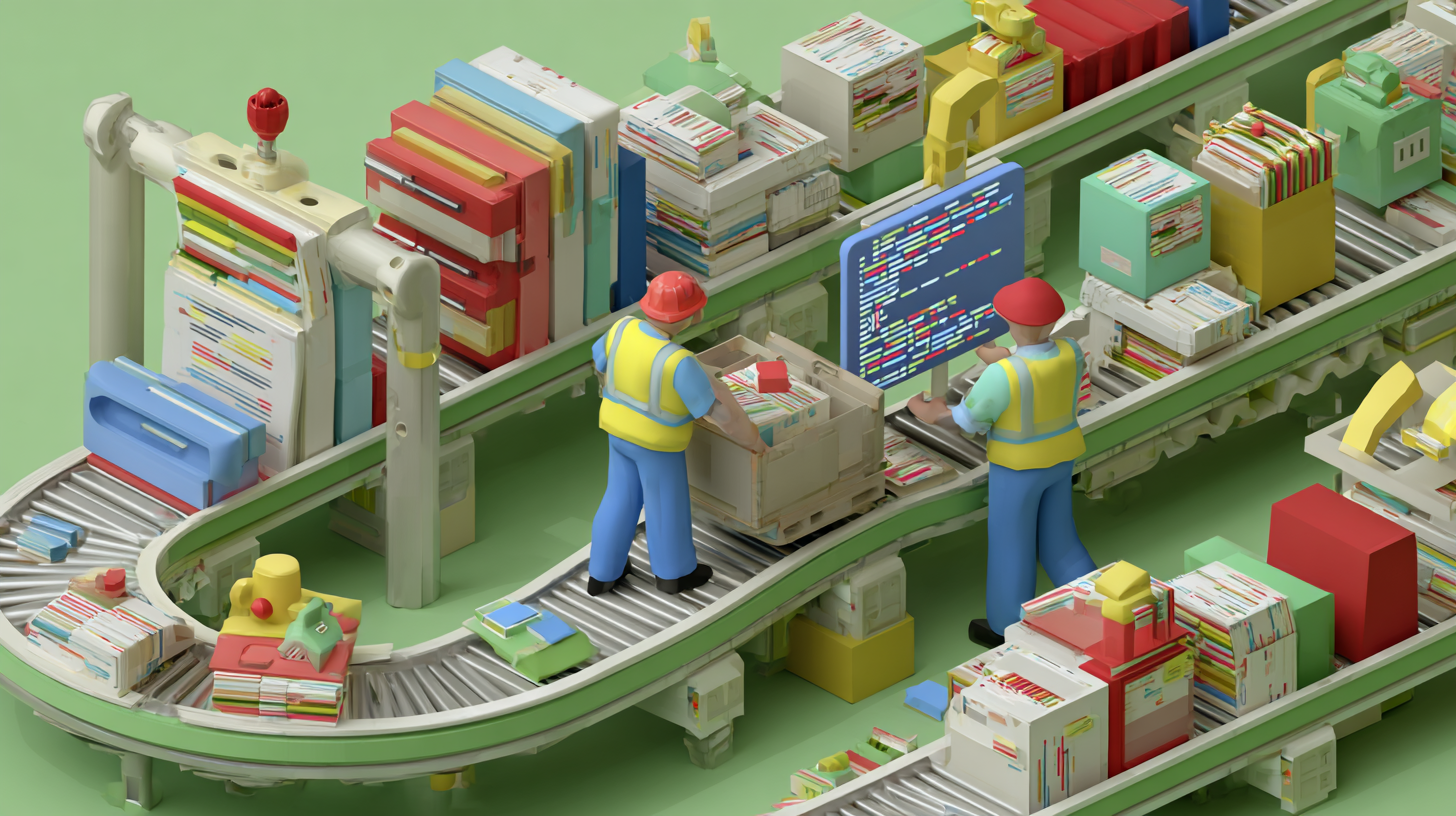
The LLM has fundamentally shifted the economics of software development.
As someone with a dual vantage point — being the #1 Product Hunter while investing in AI startups — I watch the floodwaters rise in real-time.
What’s become clear: SaaS is dying; VC is withering³. Building software is not uniquely compelling. Code has become a commodity.
What most people miss about commoditization is that when a product or resource becomes abundant, it doesn’t just get cheaper. It unlocks new and previously uneconomic uses.
Salt of the Earth
A Brief History of Commodification
Thousands of years ago, salt was so valuable that people used it as currency. Entire trade routes existed solely to move it from place to place. Wars were fought over salt mines. Roman soldiers were paid in salt (which is the Latin root of “salary”).
Eventually, civilization figured out how to extract and farm salt efficiently, leading to abundance, causing prices to free fall.
Was this the end for salt merchants? No. Instead, abundance unlocked applications no one had imagined: food preservation at scale, chemical manufacturing, water softening, even road de-icing.
And so on.
We have so much salt now that I carry around this little wooden box filled with a small fortune of Maldon sea salt:
We are rich in salt beyond our ancestors’ wildest dreams.
And yet, most of us now take this for granted. It wasn’t always so.
The pattern repeats throughout history. When streaming caused music to no longer be limited by access or distribution, we didn’t stop needing musicians — we needed more playlist curators, taste makers, and remixers. When transportation became “as reliable as running water” with Uber and Lyft, we didn’t stop needing drivers — we needed coordinators, multimodal hand-offs, and transit optimizers.
Abundance unlocks new uses.
Thanks to generative AI, code is following a similar pattern. Projects that would have been uneconomic through traditional software development are now just a prompt away. Those 500+-products-per-day on Product Hunt? Not all of them are good, but that’s what abundance brings.
But this doesn’t mean developers are obsolete. It means that the locus of value is broadening as this exclusive skill becomes more widely accessible.
Thus, the real question isn’t “will we be replaced?” but, “what becomes valuable when code itself is cheap?”
Renaissance Developers Rise
Other trades have faced this before. The savvier ones flipped commoditization on its head — leaning into abundance to develop novel and distinct experiences, expressions, and forms.
Amazon CTO Dr. Werner Vogels predicts that “developers will evolve into ‘renaissance’ professionals who combine AI tools with uniquely human judgment and domain expertise.”
Try on these three archetypes to rethink how — and on what — you work.
The Mixologist
A great bartender combines commodity ingredients — spirits, bitters, citrus — into something greater than the sum of its parts. The secret: cocktails are just ratios. Learn the proportions for a Manhattan, and you can riff on it endlessly — swap in rye for bourbon, tweak the vermouth, try different bitters, smoke the coupe.
The mixologist-developer works the same way. With open source libraries and visual builders like v0, Lovable, or Wabi, you work the ratios — digital patterns — and move fluidly through creation. The skill isn’t writing code from scratch. It’s building towards familiar classics with a twist, knowing which ingredients to reach for, or when to deviate from the recipe.
What if you could churn out functional prototypes as quickly as a bartender pours a drink? What if you could whip up a data-rich dashboard to address an idiosyncratic customer use case, or publish an app via TestFlight for a dozen friends to enjoy, or hack a Chrome Extension that finally solves one of your in-laws’ thorniest (and perennial) tech support issues?
The Record Producer
Quincy Jones or Rick Rubin. They don’t play every instrument on an album. They draw from an enormous palette — samples, session musicians, found sounds, vintage gear — and create new wholes from disconnected parts. Everything is a remix. The best producers treat samples like Easter eggs, threading nostalgic callbacks through fresh arrangements.
Some companies are starting to operate like studios. Shopify’s recent “Renaissance Edition” is a concept album in corporate form. They brought in 3D animators, motion designers, and illustrators to build a microsite that stands up as a declarative artistic statement — way beyond a paltry product update list. That’s how a producer rolls: orchestrates diverse talent toward a coherent vision (replete with Easter Eggs).
The value of the producer-developer lies in judgment and coherence. They make trade-offs between competing priorities, know when a piece is “done,” and inspire aligned contributions through clear guardrails and creative objectives rather than concentrating solely on individual contributions.
The Architect
Not the enterprise architecture kind. Think Christopher Alexander’s Pattern Language or Frank Lloyd Wright’s Fallingwater.
Great buildings start with a place: the site, the climate, the community it will serve. The materials are commodities: 2x4s, bricks, standard lumber. What distinguishes architecture from construction is the intention behind how parts are composed in response to a particular environment.
The architect-developer brings this same sensibility to software. They fight back against slopware. Too much of what gets shipped feels bolted-on — Frankenstein apps that cobble together disparate UI paradigms, user flows that scream “vendor integration”, or generic SaaS that sidesteps platform conventions. They consider how systems feel to inhabit, not just how they function. They maximize what is possible with available components to create something that belongs in concert with where it resides.
Even Anthropic knows this. They warn that “generic aesthetic undermines brand identity and makes AI-generated interfaces immediately recognizable and dismissible.”
Recognizable and dismissible! That’s the baseline you get with commodity code. The architect-developer starts there, anticipates how people should move through a space, and adds structure to make it inevitable.
You’ll note that missing from these archetypes are lines of code written, GitHub commits, or velocity metrics. The skills that matter now aren’t predicated on volume alone but require taste, judgment, cultural fluency, orchestration, and narration:
But how can I be certain?
Adventures in Vibe Coding
In the last several months, I’ve created more code than I have in 20 years.
I’m not a developer, despite having led Developer Experience teams at Google and Uber. Now in my free time, I’m taking on ambitious coding gambits that I have no business dabbling in.
Lately, I’ve been vibe coding extensions for Raycast — productivity shims that automate my routine online activities. The approach: describe what I want to Claude, get to a prototype fast, iterate through improvements in Windsurf, publish the results to GitHub.
Currently, I’m refactoring Raycast’s Homebrew extension — an extension with over 200K installs. I’m not writing code in the traditional sense. Claude and I developed a detailed list of improvements, and we’ve been plowing through them, one tranche at a time.
The result? Greptile called my contribution: “a well-executed refactor that transforms a monolithic extension into a properly structured, maintainable codebase. The changes show strong software engineering principles.”
Sure, Greptile is also a robot, but the code I produced through a natural language conversation with a robot was evaluated as “demonstrating strong engineering principles”. Not just “good for AI-generated slop” — just good, period.
With Opus 4.5, an entirely new spice cabinet has been opened to me, and I’m cookin’ like I never have before.
Before, syntax stymied me from the jump. Now I’m creating fully functional extensions all on my own (yes, with a little help from my robot friends).
But here’s the kicker: I’m the canary in the proverbial salt mine.
If someone like me — product person, not engineer — can now ship functional software through conversation, what does that mean for the 100 million people who will try this in the next five years?
To understand where this is headed, we need to see where it came from.
The Arc of Computing
LLMs arrived in a hurry, but their progenitors laid the foundations for generations.
In 1968, Doug Engelbart demonstrated his oN-Line System (NLS)— showing off for the first time the mouse, GUI, hyperlinks, and real-time collaborative editing. These were tools for experts, but the vision was unmistakable: make computers responsive to human intent through direct manipulation.
In 2007, Steve Jobs’s iPhone replaced the keyboard and mouse with multitouch, ushering in the iPad Generation and expanding computing access to anyone with fingers.
Then in 2013, “Her” gave us a prescient look at conversational AI, incidentally depicting how a four-year-old might respond to computers that could talk: with a shrug and a grin. That actress (Gracie Prewitt) is now 16. Her generation treats voice interfaces as passé if not perfunctory.

Call them the ChatGPT Generation.
The point is that generative AI isn’t a break from computing history. It’s a continuation of a 60-year project to reduce the gap between human intention and machine execution, and my vibe coding experiments are a direct consequence.
As Code Commoditizes, Collaboration Crystallizes
As code becomes commodity, the organizations thriving aren’t dredging proprietary moats — they’re building collaborative structures that alchemize abundance into advantage. Each embodies one of the archetypes above. For example:
The Mixologist:
Raycast embodies mixologist energy — resisting
Sherlockification (when Apple clones third-party features) by providing essential and remixable ingredients, fronted with stylish execution, and an open invite to publish an extension to their store. They supply the spirits; the community creates the cocktails.
The Producer:
Bending Spoons operates as a Producer guild. Founded in Italy in 2013, they realize latent value in underperforming assets — Meetup, Eventbrite, and Evernote — and orchestrate turnarounds into coherent wholes greater than the sum of their parts. They’re raking in millions not by building from scratch, but by producing new arrangements from existing catalogs.
The Architect:
Every builds bespoke systems that respond to context. They show taste through distinctive aesthetics, judgment in killing what isn’t working (Spiral was a social prompt-building platform, but was rebooted as an AI writing partner), and narration that teaches their methodology through a newsletter, video podcasts, and live show-and-tells. They’re not just shipping products — they’re designing a coherent environment for a specific community to inhabit.
These are just a few non-big-tech examples of how communities of practice are galvanizing around code as a commodity input. The patterns are visible; the question is whether we will recognize ourselves in them — and what we’ll do once that happens.
Experts will still be worth their salt
Remember the Maldon salt wooden box I carry around? What was once a soldier’s wages now sits in my pocket to serve my personal indulgence — a pinch of these finishing flakes elevates otherwise bland cuisine.
And so we will use code to enhance conventional computing experiences.
As it follows the arc of computing, code will become as ubiquitous and unremarkable as table salt.
What once required years of training and substantial capital to master will be a resource in everyone’s pocket or on every dinner table—and cost next to nothing.
But carrying around salt in my pocket didn’t make me a chef.
Sure, I can season scrambled eggs. But there’s a canyon between that and knowing when to brine, when to cure, or when a salty pinch will elevate and not overwhelm.
This moment feels threatening if you’ve built a career learning to code well. The work of “programmer-sous chefs” will be disrupted. Prep; line work; dish washing. AI is already covering their coding equivalents (I see these products launch daily on Product Hunt).
And yet, AI can’t decide what’s worth making, how to solicit and curate open source contributions, or know when something is “done.”
It’s because AI lacks taste. There’s good reason why it’s the buzzword of the year!
The mixologists, producers, and architects? They embraced abundant ingredients and freed themselves. Less time spent painstakingly sourcing, more time exploring and creating. The hard skills of production are taking the backseat in favor of skills that once seemed soft, secondary, nice-to-have. Interdisciplinary edge-riding may become the hallmark of the well-rounded and capable internet citizen.
As I’ve matured out of the rough and tumble era of self-righteous rebellion, I’ve been thinking about the value my perspective can offer a younger cohort of digital builders, without slipping into paternalism.
Becoming an Elder from the Future
When we’ve spent years (or decades) building a career, forming an identity, and honing a craft, and a tidal wave of change and uncertainty appears on the horizon, it’s normal to fret about whether we’ll be able to ride it or if it’ll drag us out to sea.
As AI takes more coding tasks from us:
- Human judgment — what to work on — becomes more valuable.
- Intuition — what feels good — becomes more valuable.
- Creativity — what expresses something essential — becomes more valuable.
What makes this moment genuinely exciting is that taste and cultural fluency align to create coherent products that resonate. Narrating the meaning of one’s choices scaffolds and attracts community.
These capacities don’t outsource easily to algorithms.
With the 20+ years of experience I have, my partner refers to me as an elder from the future…
She points out that the opportunity in front of us is enormous: teach taste to the coming wave of AI-assisted developers. Coach and contextualize the knowledge we’ve accumulated from decades of building and shipping. Shape and expand solution spaces for broader benefit, rather than pursuing the hollow logic of extraction.
The commoditization of code will unlock new applications of digital technology, requiring new skills and ways of seeing through to solutions. Software will seep like salt into everything we make.
Whether it seasons or corrodes will depend on human judgment.
So my invitation: join me in deeply engaging with this moment. It won’t come again. Just as I can’t go back to the early days of Flickr (user #1515), Twitter (user #1168), or Instagram (user #19), you won’t be able to come back to this moment in 20 years either.
How will you help shape it?
This invitation is asking you to step into roles that demand more of your humanity, not less.
Which archetype will you choose to embody?
- The Mixologist, combining abundant components with finesse and restraint
- The Producer, orchestrating contributions and shaping raw talent into coherent statements
- The Architect, creating bespoke experiences that respond to specific contexts
You can view Chris Messina's full "AI Native DevCon - Code as Commondity" talk here.
COPY & SHARE
Chris Messina
Chris Messina invented the hashtag and now invests in vertical AI via the Ride Home AI Fund, focused on AI, design, and human–machine interaction.
READING
·
0%
IN THIS POST
COPY & SHARE
Chris Messina
Chris Messina invented the hashtag and now invests in vertical AI via the Ride Home AI Fund, focused on AI, design, and human–machine interaction.