ARTICLE
Kilo bets on context as the bridge between AI coding agents and chat apps
Kilo Code’s new Slack integration connects chat and coding by allowing AI agents to turn team discussions into concrete code changes while preserving context.

Paul Sawers
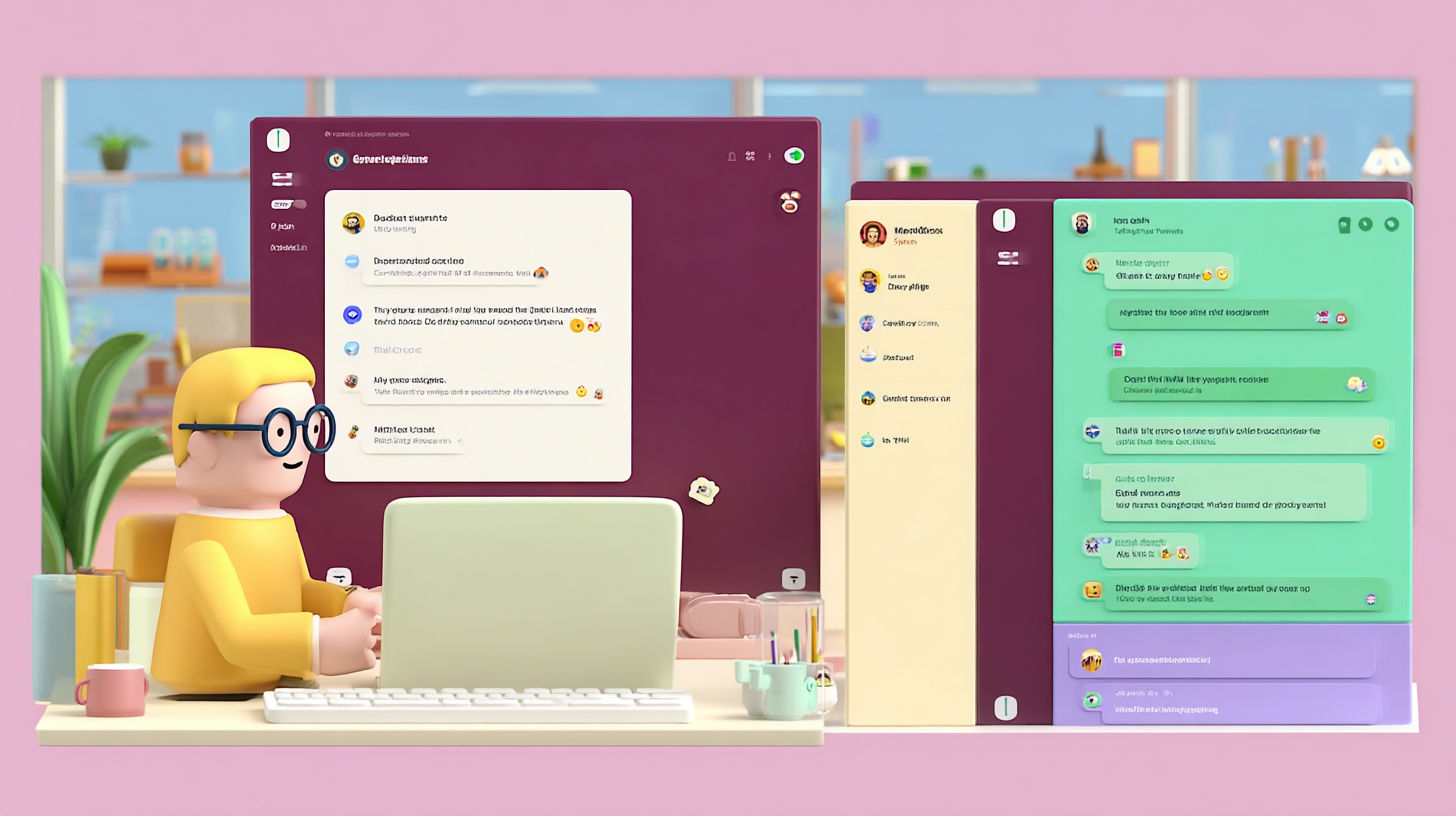
Engineering teams have long used Slack to discuss bugs, features, and fixes, but the actual work of building software has traditionally happened elsewhere — in integrated development environments (IDEs), ticketing systems, and version control tools. That separation forces developers to convert decisions made inside chat apps into actions within other systems, often introducing friction and context loss along the way.
With the rise of AI-powered coding agents, that divide is starting to narrow. Slack and similar tools are increasingly being used not just to talk about software development, but also initiate and delegate development work. In short, they are becoming an entry point for execution, as agents gain the powers to act directly on the context captured in team conversations.
Kilo Code’s new Slack integration illustrates that shift, giving teams a way to move from discussion to deployment without leaving the chat.
A kilo of context for coding agents
Kilo, for the uninitiated, is an open source AI coding agent and developer platform designed to help teams generate, debug, and ship code.
Until now, Kilo has primarily been accessed through developer-facing interfaces, such as its command-line interface or IDE extensions for tools like Visual Studio Code and JetBrains. Last week, however, the company announced Kilo for Slack, a bot that integrates its AI coding capabilities directly into Slack channels and threads.
This means that users can mention @Kilo in a thread to have the bot read the entire conversation, understand the context, and either answer questions about a codebase or create code changes such as pull requests — all from inside the Slack interface.
In practice, teams can use the bot to investigate errors shared in chat, explain how parts of a system work, or implement fixes discussed during Slack conversations without manually translating those decisions into separate tools.
The bot supports multi-repository inference, continuous context, and cloud-based agents that execute tasks without requiring developers to copy information into external tools. Once connected to a team’s GitHub repositories, Kilo can be invoked from any channel or direct message, acting on the shared context of a thread rather than isolated prompts.
“Engineering teams don’t make decisions in IDE sidebars – they make them in Slack,” the company wrote in a blog post. “Slack has become more than just a messaging app. As startups and engineering teams have increasingly moved away from siloed workflows, Slack has become the central operating system where critical decisions are made and work gets done. Yet, most AI coding tools still force developers to leave context behind.”
And it’s this context — spanning Slack threads, repositories, and prior decisions — that Kilo positions as its distinguishing factor.
“Unlike most existing Slackbots, which are limited to a single repository or break down as soon as conversations get complex, Kilo for Slack works seamlessly across multiple repositories and infers which one you’re talking about,” the company writes.
That emphasis on conversational context aligns with a growing set of efforts across the ecosystem to treat context as an engineering problem in its own right. Rather than relying on short prompts or stateless interactions, teams are experimenting with ways to structure, compress, and persist knowledge so agents can act with less supervision. Tessl, for example, is exploring how structured context can improve agent reliability, with one developer recently showing how providing Anthropic’s Claude with curated documentation helped it fix real-world bugs in Go code.
Through that lens, Kilo’s Slack integration reflects a broader shift: as agents are asked to take on longer-running tasks, the ability to reason over shared, evolving context is becoming as important as the underlying model itself. And for many teams, that shared context lives inside chat apps.
Chat apps as an interface for coding agents
That reality helps explain why more AI coding systems are being integrated directly into collaboration tools. Anthropic recently shipped a Slack integration for Claude Code that lets users tag the assistant in conversations to spin up coding sessions through context pulled from threads and related messages. And GitHub, meanwhile, has also integrated its Copilot coding assistant into Microsoft Teams.
That evolution reflects a deeper change in how teams work: the boundary between talking about code and writing code is blurring. As agents take on longer-running and more autonomous roles, teams are increasingly delegating work directly from chat, rather than treating it as a precursor to execution elsewhere.
Slack’s ubiquity as a collaboration tool makes it a natural host for these integrations, but the real value lies in how shared context is captured and acted on. Kilo’s new Slack integration is an early example of social platforms being used to carry work from discussion through to execution, but the test will be whether context from chat holds up once it turns into production code.
COPY & SHARE
Paul Sawers
Freelance tech writer at Tessl, former TechCrunch senior writer covering startups and open source
READING
·
0%
COPY & SHARE
Paul Sawers
Freelance tech writer at Tessl, former TechCrunch senior writer covering startups and open source
YOUR NEXT READ
What GitHub learned when better tools made Copilot code review worse
GitHub's migration of Copilot code review to shared tools initially worsened performance. Rewriting instructions improved accuracy and reduced costs by 20%.
Paul Sawers