ARTICLE
Ollama helps Claude Code run locally on open-weight models
Discover how Ollama enables Claude Code to run locally on open-weight models, offering developers control over costs and data.

Paul Sawers
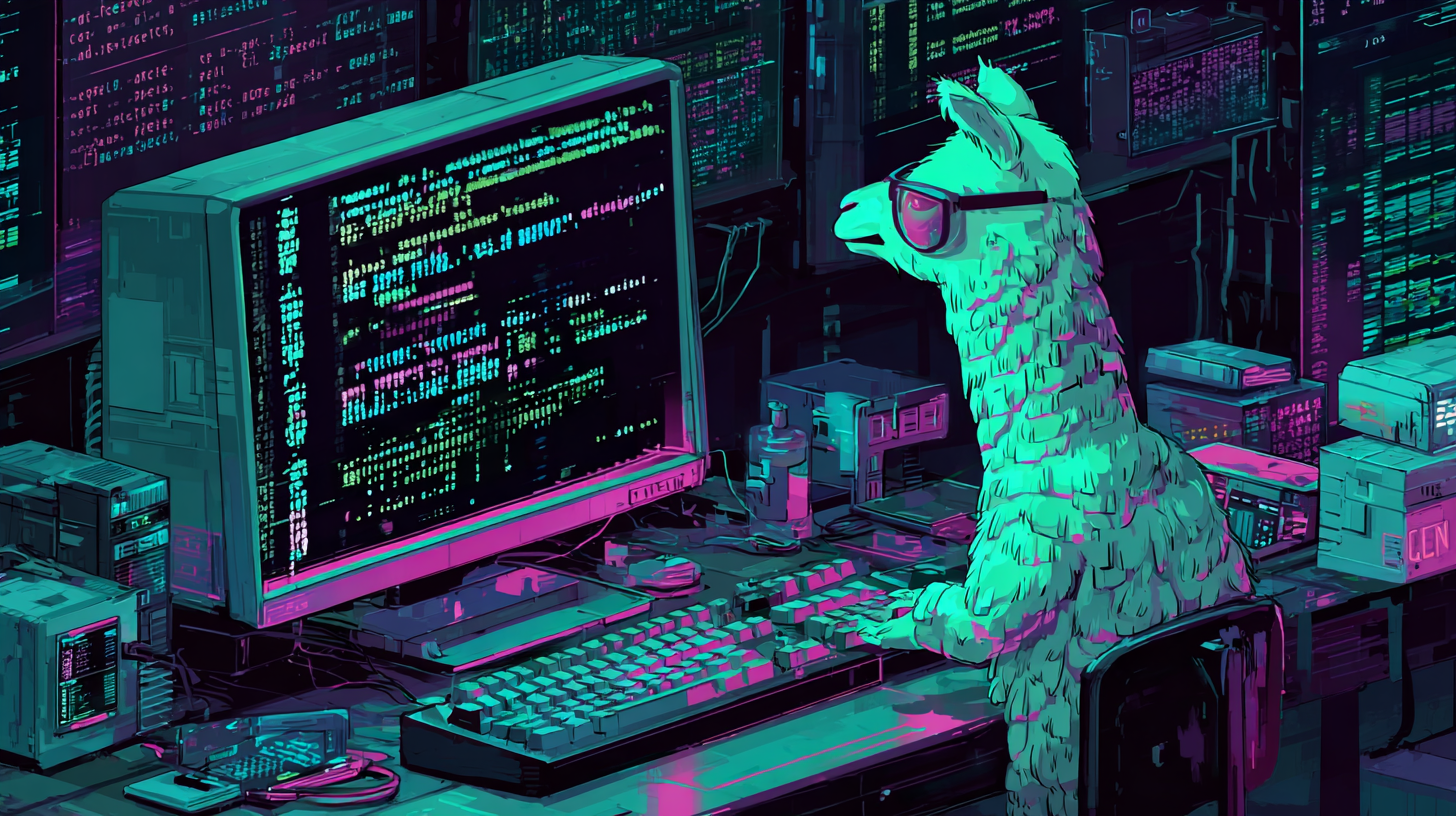
Claude Code has emerged as the poster child of the AI coding boom, largely on the strength of its ability to navigate and modify large codebases with minimal human input.
Built by Anthropic, an AI juggernaut now valued at a reported $350 billion, Claude Code has become the benchmark for what an agent-style coding assistant can do beyond autocomplete and chat. But for all its superpowers, there is a clear trade-off: Claude Code runs entirely on Anthropic’s proprietary cloud and large language models (LLMs), requiring developers to send source code and project context off their own infrastructure. For teams that care about where their code runs, how costs scale, or how reliant they are on a single vendor, that dependency can be a sticking point.
And so it’s against that backdrop that Ollama this week announced that it has added support for Anthropic’s Messages API, allowing Claude Code to run against models served by Ollama instead.
Ollama, for the uninitiated, maintains a growing catalogue of LLMs, including open-weight models from major AI labs such as Meta, Google, Mistral, and Alibaba, which can be downloaded and run locally on a developer’s own machine or private infrastructure.
With Ollama’s support for the Messages API now in tow, Claude Code can be decoupled from Anthropic’s cloud without changing how the agent itself works. The agent continues to handle planning, code navigation, and edits, while the underlying model runs outside Anthropic’s infrastructure — shifting control over cost, data handling, and deployment back to the developer.
Community reaction: ‘This changes everything’
Reaction to Ollama’s update has been varied, with some industry figures calling it a major win for local, developer-controlled AI tooling. On LinkedIn, Edgar Kussberg, director of product management at code quality company Sonar, described the change in expansive – if somewhat hyperbolic – terms. “This changes EVERYTHING for AI tooling,” Kussberg wrote.
“Imagine having Claude-level agentic tooling… but free and running locally on your machine,” he said. “That’s exactly what Ollama just unlocked.”
Elsewhere, the developer response was more muted. On Reddit, several commenters pointed out that routing Claude Code to third-party models was already possible through unofficial means. These setups typically relied on redirecting Claude Code’s API calls to custom backends built on tools such as llama.cpp, vLLM, or so-called Claude Code routers.
The exchanges also underscored the trade-offs between model quality and the practical advantages of running models locally.
More broadly, some in the community questioned why developers could not just use third-party agents that support multiple models, including Claude. The question came up in exchanges about tools like OpenCode, an open source AI coding agent impacted by Anthropic’s recent restrictions on unauthorized third-party access to Claude models.
This episode could also help explain why Ollama’s approach may prove less contentious: it’s not embedding Claude’s models in a competing agent, but instead runs Anthropic’s own Claude Code agent against locally hosted, open-weight models. By keeping proprietary models out of the equation, Ollama’s setup could be less likely to trigger the same enforcement concerns that have surrounded other mix-and-match tools. It may also align more closely with Anthropic’s interests by preserving Claude Code as the reference agent experience, even when developers experiment with alternative model backends.
However, that tension between greater flexibility and the limits of what platform owners will tolerate feeds into a broader question about interoperability and vendor lock-in.
Interoperability vs vendor lock-in
There’s no denying Claude Code’s growing influence among developers, but until now, that influence has been tightly coupled to Anthropic’s infrastructure. Running Claude Code has required sending code and context to Anthropic’s servers and relying on its proprietary models — an arrangement that can be a poor fit for teams with strict data locality requirements, predictable cost constraints, or a preference for running systems on their own hardware.
Ollama’s update doesn’t change the proprietary nature of Claude’s models, nor does it turn Claude Code into open source software. Instead, it creates a middle ground, of sorts: the agent remains Anthropic’s, but the model layer can be swapped out. By pairing Claude Code with locally run, open-weight models, the approach separates an influential agent interface from a single model provider -- it's not a break from vendor control, but it does loosen the ties.
COPY & SHARE
Paul Sawers
Freelance tech writer at Tessl, former TechCrunch senior writer covering startups and open source
READING
·
0%
COPY & SHARE
Paul Sawers
Freelance tech writer at Tessl, former TechCrunch senior writer covering startups and open source
YOUR NEXT READ
What GitHub learned when better tools made Copilot code review worse
GitHub's migration of Copilot code review to shared tools initially worsened performance. Rewriting instructions improved accuracy and reduced costs by 20%.
Paul Sawers