ARTICLE
Warp goes open source, betting agents and community can outpace closed rivals
Warp open-sources its terminal client, leveraging AI agents and community input to redefine software development.

Paul Sawers

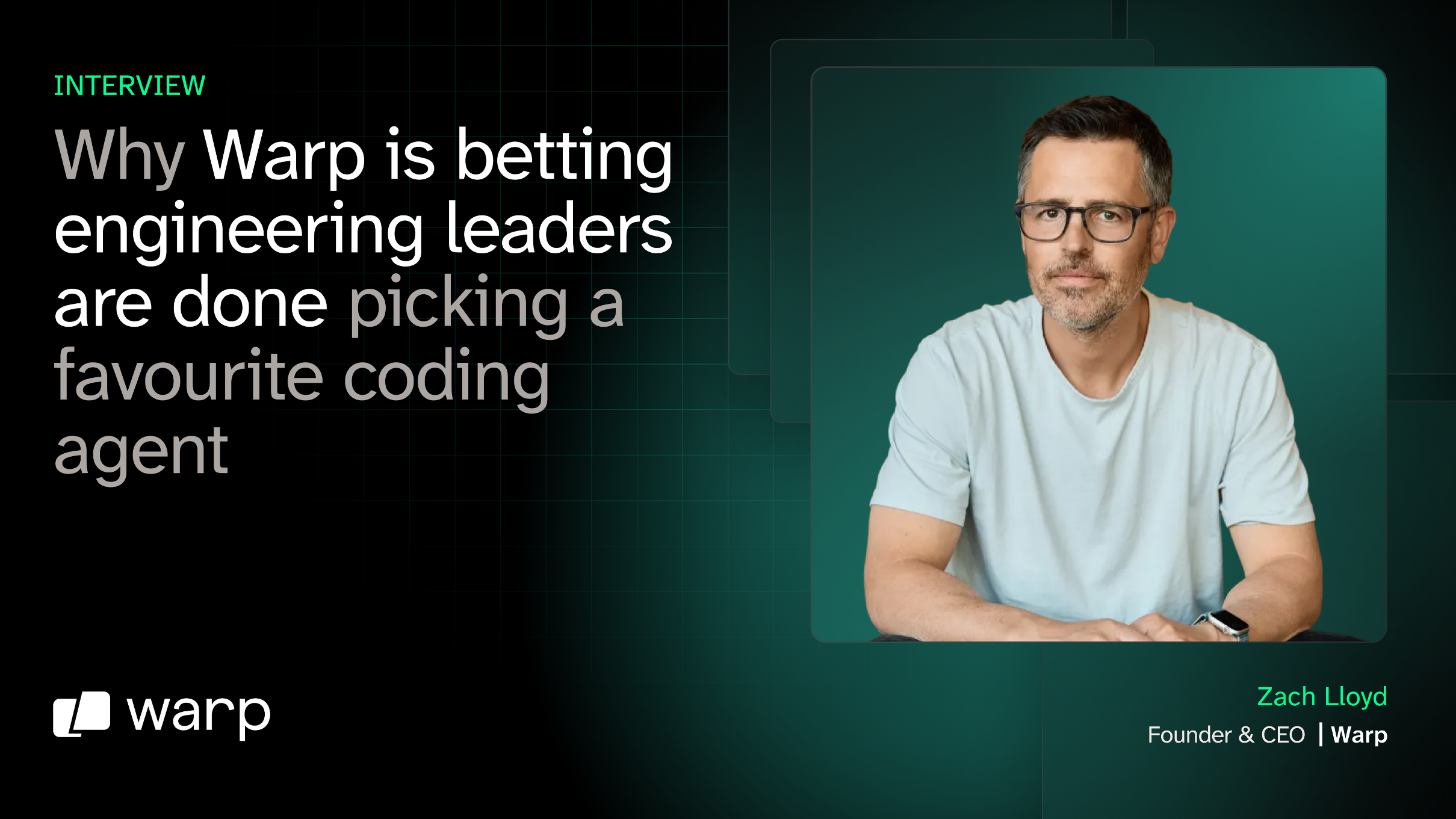
Warp, the developer tooling startup behind the modern terminal of the same name, is open-sourcing its client — and tying that move to a broader shift in how it believes software will be built.
With AI agents now capable of handling much of the implementation work, Warp argues the real constraint now lies in defining what to build, coordinating tasks, and verifying outputs. Opening up the codebase, it says, allows a wider pool of contributors to take on that role — effectively supervising a growing fleet of agents.
“The biggest bottleneck to development is no longer writing code – it’s all the human-in-the-loop activities around the code: speccing the product and verifying behavior, and frankly, we are limited in what our internal team can do and the pace we want to move at,” Warp founder and CEO Zach Lloyd wrote in a blog post.
OpenAI is a founding sponsor of the new Warp repo on GitHub, with Warp’s agent workflows powered by GPT models.
A different kind of open source
Warp isn’t just publishing its code and inviting pull requests. It’s proposing a more structured setup, where agents handle coding, planning, and testing, while human contributors focus on direction and validation.
This means ideas flow in through public GitHub issues, are picked up by agents orchestrated via Warp’s internal platform, Oz, and are then reviewed by both the community and the core team.
The aim is to increase throughput without expanding headcount.
“Open-sourcing with an agent-powered repo is our vision of how software will be built in the future,” Lloyd said. “Humans managing agents at scale to build production-grade software is the model, and implementing this model in the open will allow software to improve most quickly.”
The company says it already has confidence in code generated this way, pointing to internal use of agents for implementation-heavy tasks. Opening that process up, it argues, should accelerate development further — and surface ideas it might not arrive at on its own.
“We’ve found that agents can handle the implementation heavy lifting really well,” Lloyd continued. “That frees contributors to focus on the higher-leverage work: shaping what gets built and making sure it’s right.”
For sure, this approach follows a familiar trend of late, where the software development process transitions from writing code to managing the systems that produce it. And this is what Tessl is explicitly building around, serving as an agent enablement platform for managing the context that coding agents rely on — treating agent skills and context as software that needs to be built, evaluated, and continuously updated as systems evolve.
Warp uses openness as a lever
Warp is explicit about the competitive backdrop behind its decision. It points to “highly funded, closed-source competitors” and acknowledges it can’t match them on pricing or resourcing.
Instead, it’s positioning openness as a lever — not just to attract contributors, but to move faster by distributing parts of the development process. The addition of wider support for open models, including systems such as Kimi, MiniMax, and Qwen, along with a new “auto (open)” routing mode that selects the most suitable model for a given task, reinforces that stance.
Alongside the open-source release, Warp is also expanding how much users can customize the environment, letting them choose between a plain terminal and a more fully featured setup with built-in agents, diff views, and file navigation tools.
Ultimately, it’s a bid to differentiate on flexibility and pace in what is a super-competitive space.
Agents change the equation
Underlying all of this is a view about what AI agents actually change.
Warp argues the biggest gains are no longer in code generation itself, but in offloading the surrounding work — planning, coordination, verification — that has traditionally slowed development cycles. If agents can handle the bulk of execution, then expanding the pool of people who can guide and review that work becomes the next step.
That’s where open-source comes in. Rather than scaling an internal team, Warp is betting that a community — working alongside agents — can iterate faster and push the product in directions a smaller group might miss.
It’s a notable contrast to other recent moves in the market, where some companies have pulled back from open development over security concerns tied to AI. Warp is taking the opposite view: that agents make openness more valuable, not less.
COPY & SHARE
Paul Sawers
Freelance tech writer at Tessl, former TechCrunch senior writer covering startups and open source
READING
·
0%
COPY & SHARE
Paul Sawers
Freelance tech writer at Tessl, former TechCrunch senior writer covering startups and open source
YOUR NEXT READ
What GitHub learned when better tools made Copilot code review worse
GitHub's migration of Copilot code review to shared tools initially worsened performance. Rewriting instructions improved accuracy and reduced costs by 20%.
Paul Sawers