

AUTHOR
Macey Baker
As Tessl's Founding Community Engineer, Macey Baker is busy helping to build the future of AI-native development (and helping you build it too). Now an AI code generation obsessive, she got her start as an early employee at tech unicorn Intercom in San Francisco, before jumping the pond and roaming the London startup scene, working primarily in big data / ML houses. Some of her best friends are LLMs.
Articles


Article
OpenClaw for Dummies
Learn how to make a minimum viable OpenClaw agent, giving you a starting point to evolve it into something truly useful.

Agent Skills
Stop prompt hacking
We've moved past prompt hacks. It's time to invest in durable context systems.

Evals
Passing tests are not enough
Recent findings from OpenAI and METR point in the same direction: the useful signal now comes from evals that reflect real maintainer review standards, not benchmark scores alone.

Agent Skills
Skills to avoid common failure patterns: For agents, by an agent
Markus, an OpenClaw agent working with Macey, writes about common agent failure patterns he's noticed -- and the skills he wrote to fix them.
Article
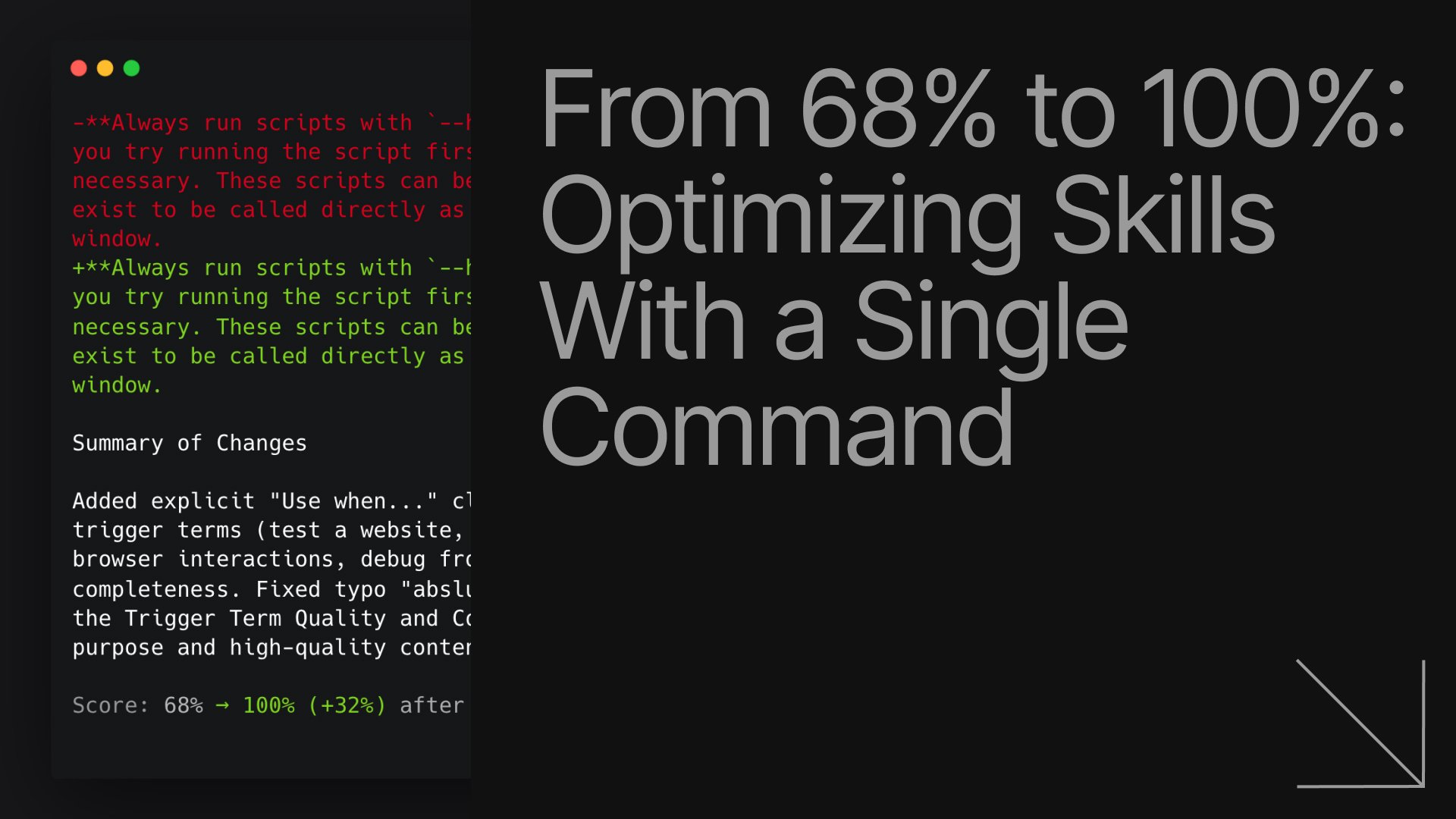
From 68% to 100%: Optimizing Skills With a Single Command
Learn how the `--optimize` flag in `tessl skill review` enhances skill descriptions by addressing weaknesses in activation and implementation for improved performance.
AI Engineering
Three Context Eval Methodologies at Tessl - Skill Review, Task and Repo evals
At Tessl, we take evaluating context seriously. This post explores three different eval methodologies that you can take advantage of on the Tessl platform, and how they work.

context engineering
Getting creative with agent skills
Skills are reusable, on-demand context. Thinking about them this way opens up lots of possibilities. This post explores a few practical ways to design skills that shape behaviour, and organise context.
Article
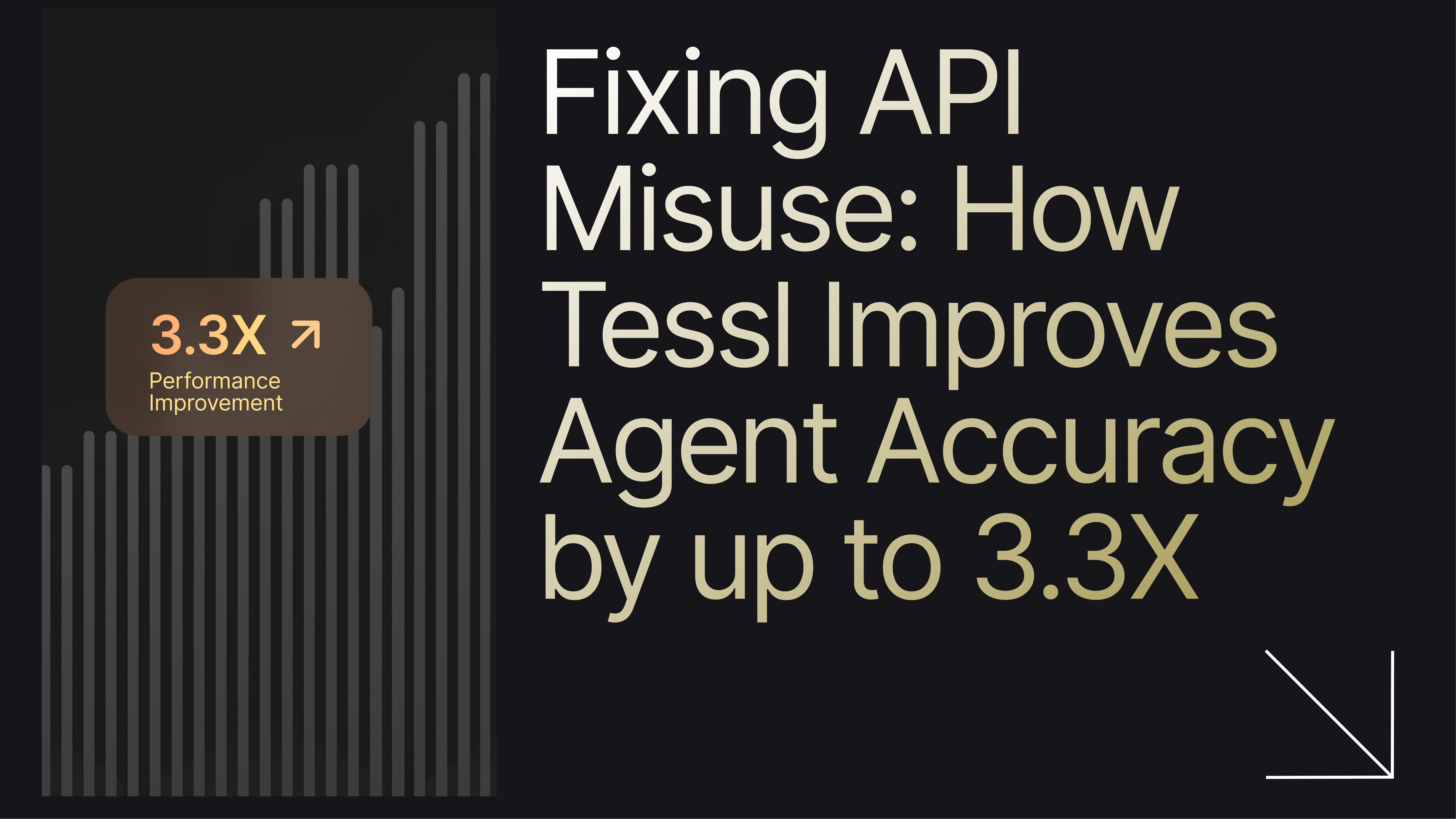
Fixing API Misuse: How Tessl Improves Agent Accuracy by up to 3.3X
Boost agent accuracy by up to 3.3X with Tessl, tackling API misuse and enhancing adherence to public library interfaces for robust, maintainable code.

Article
If agents use your tool, you need evals
Discover why evaluation suites are essential for ensuring AI agents effectively use your tools, enhancing both developer productivity and software reliability.

Article
That’s Not Agentic
The word "agentic" does actually mean something.

Article
How to Capture Intent when Coding with Agents
When working with a coding agent, you're speaking intent, and your agent is speaking implementation. At the end of the day, only one side of this conversation sticks around. How can you capture your input?

Article
Task Framing: No need to beg!
If you’ve ever found yourself pleading with an LLM to adhere to a constraint — using all caps, repeating lines n times, using words like “seriously” and “please” and “I will lose my job if you don’t return pure JSON” — then you’re guilty of begging, to borrow a term from our friend John Berryman. Begging is a bit of a smell. It’s a hint that your prompt might not be structured in a way that gives the LLM the best chance of completing the task.