
SPEAKER
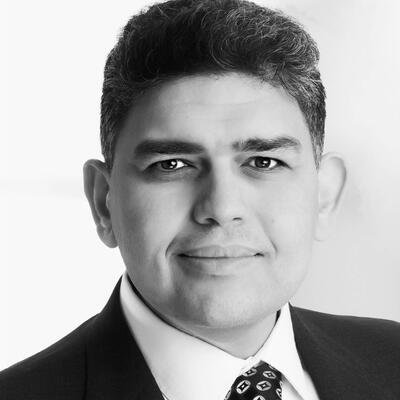
Ahmed E. Hassan
Queen's University, Canada
Hassan is an ACM/IEEE/NSERC Steacie fellow. He is a laureate of the Mustafa Prize, a distinction equivalent in prestige to a Nobel, for founding the AI-augmented SE field and its associated Mining Software Repositories (MSR) conference. He is a Distinguished Educator of IEEE TCSE and an Influential Educator of ACM SIGSOFT. He is the Canada Research Chair (CRC) in Software Analytics, and the NSERC/BlackBerry SE Chair at the School of Computing at Queen’s University, Canada.
Upcoming sessions
See complete program3 November
12:25 PM · 30 min
The Tool Got Smarter. Did You?
AI coding is often presented as a technology shift: better models, longer context windows, and more capable agents. But the real change is much deeper. This is a new way of thinking about how we understand problems, discover solutions, build software, evaluate evidence, and take responsibility for what we ship.
The tool changed. The question is: did we?
When AI can explore a codebase, propose a design, implement a feature, write tests, and review its own work, being a good engineer can no longer mean simply producing good code. We must become better at framing problems, expressing intent, directing work, questioning convincing answers, learning through rapid experimentation, and exercising judgment when no test can tell us what is right. Leaders must also rethink what they reward, how people learn, and what meaningful AI adoption actually looks like.
This is not a talk about which coding agent to buy or which prompt to use. It is about the human and organizational transformation required when the tool becomes dramatically more capable. Through relatable stories, uncomfortable failures, and seven practical principles plus one essential constraint, we will explore how to benefit from AI without becoming passive, superficial, or dependent on it.
The central question is no longer simply, “How do I use this new tool?” It is, “Who do I need to become now that the tool can do so much of what used to define my work?”