
Fix vulnerabilities at agent speed
Your agents ship faster than security can review. Tessl fixes vulnerabilities before the code merges.
Included with the Tessl platform
Teams building with Tessl











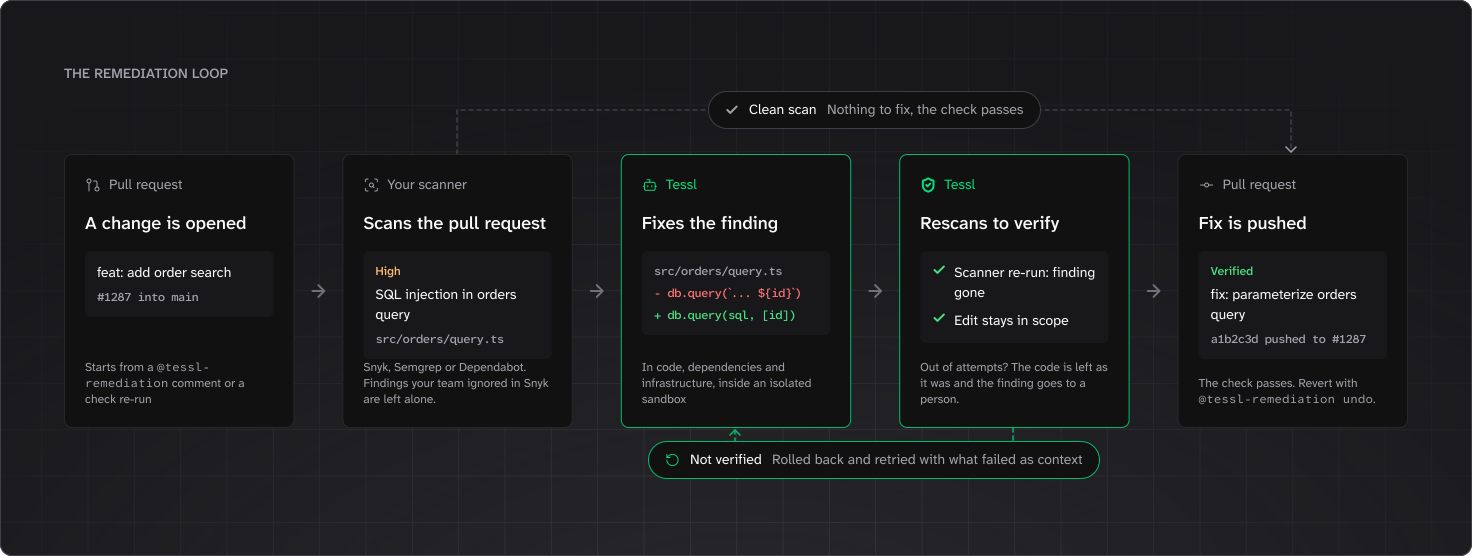
Agents attack at machine speed. Defense has to keep up.
Attackers exploit vulnerabilities a week before the patch, on average.
-7
days
The average time to fix half of known vulnerabilities.
243
days
AI-generated code contains a security flaw.
45%
Sources: Mandiant M-Trends 2026, Veracode State of Software Security 2026, Snyk ToxicSkills 2026.
WHAT YOU GET
One factory, from finding to fixed
Your team reviews fixes, not findings.
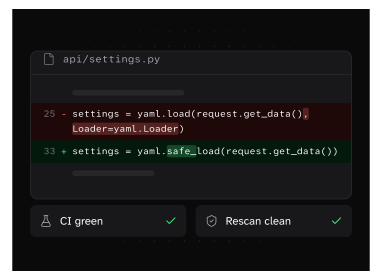
Get fixes that remove the vulnerability
Every fix is checked against your tests and re-run through the scanner that found it. It only counts if the vulnerability is gone.
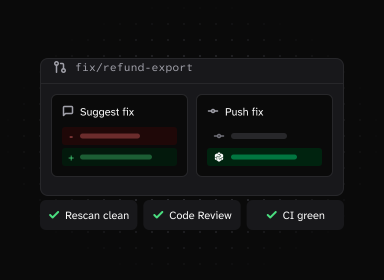
Merge with confidence, then automate
Code review and change-risk assessment support every approval. Start with human sign-off and move to auto-merge under your rules.
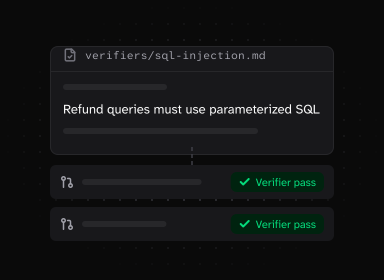
Stop agents shipping it broken again
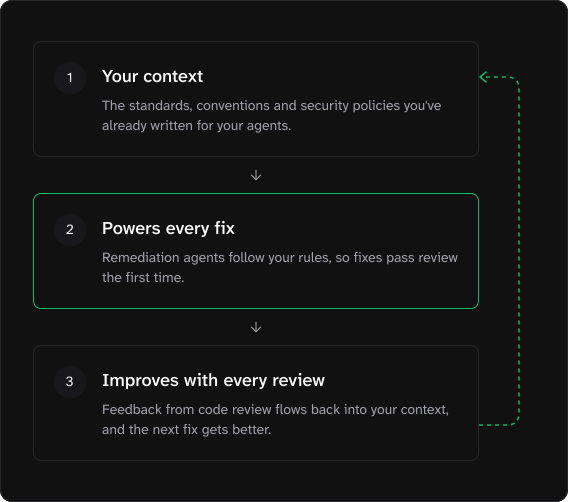
When a fix merges, Tessl suggests an update to the context your agents work from. Approve it, and your agents avoid that vulnerability in the code again.
Built on your context and proven on ours
Other tools read your code. Tessl also follows the standards, conventions and security policies your team has written for its agents, so fixes match how you build. Every review improves those standards, and every fix after it gets better.
Start with security and grow your factory
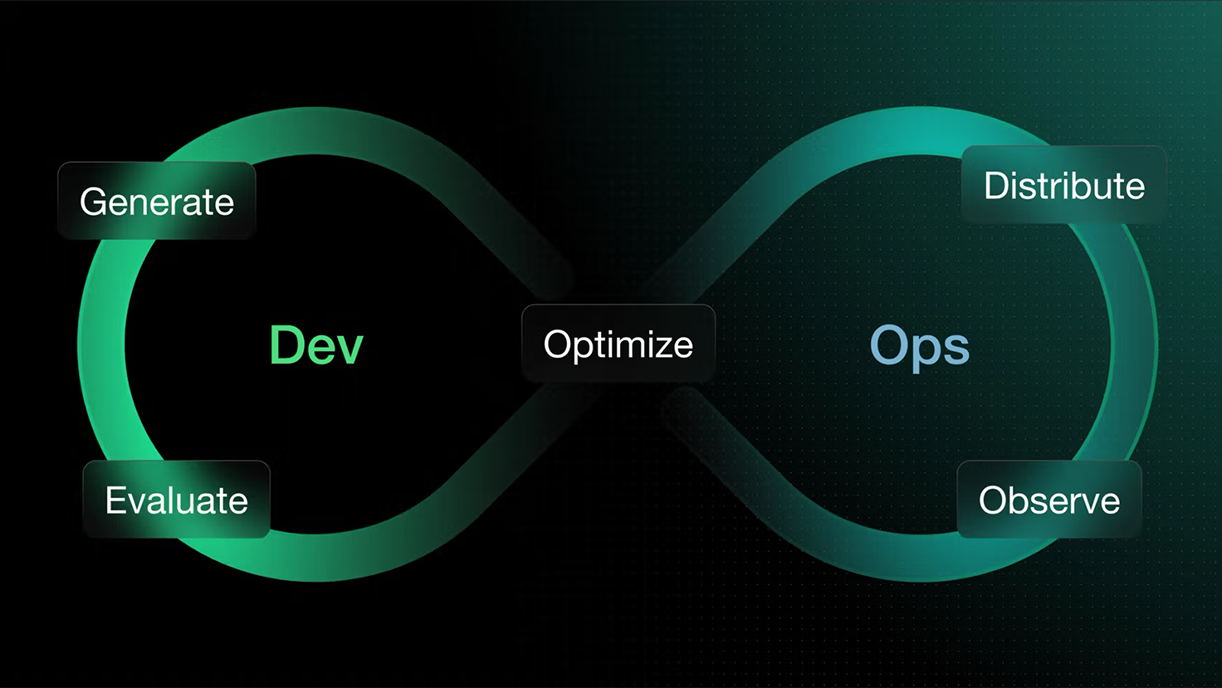
Remediation is one loop in your software factory.
Turn tickets into reviewed PRs.
Writing code
Ticket
Linear, Jira
Coding agent
or a developer
Pull request
Pull request
the diff
Tessl Code Review
Live
Tessl reviewer app
Merged
approved
In your repo
Review lenses
Correctness · Security · Scale · Maintainability + yours
Example Tessl Code Review
Tessl Code Review
Changes required
Required
Security and Privacy
Returns email addresses to any signed-in user.
src/api/users.ts:48
Advisory
Maintainability and Code Quality
Rebuilds the existing retry() helper.
Advisory
Scale and Resilience
No timeout on the payments API call.
How it works
From connected repo to first fix in 7 minutes
01
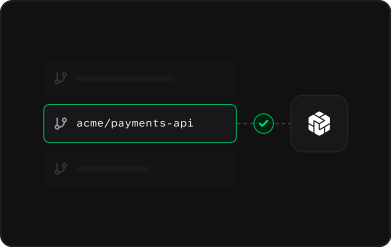
Connect a repo
Install the Tessl GitHub app and pick a repo.
02
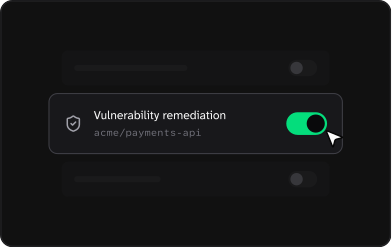
Turn it on
Enable vulnerability remediation for that repo.
03
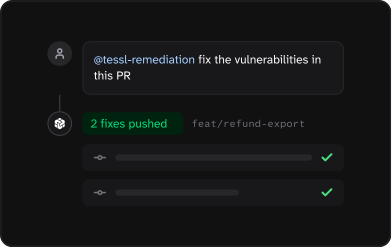
Tag Tessl on a PR
Tessl scans the change and pushes fixes straight to your PR.
ENTERPRISE
Secure your agents with our engineers alongside yours
Tessl's forward-deployed engineers set up the remediation loop on your repos and prove it against your own baseline.

Hands-on setup
Our engineers build it with your team.
Your rules
Results measured against an agreed baseline.
Proven on your backlog
Human approval first, auto-merge when you're ready.
SOC 2 Type II
SSO
Audit logs
Bring your own LLM
Self-hosted
Go deeper on agentic security
Hear from the team who built it, see Verifiers in action, and build your own review loops.
Article
Securing the Coder, Not the Code
Explore agentic development's impact on software security.
16 min read
Guy Podjarny
Video
We Scanned 3,984 Skills: 1 in 7 Can Hack Your Machine
The engineers behind the tool explain what it does and why it works differently, in under 6 minutes.

Podcast
The Hidden Security Risks of AI Coding Agents
Hear why your coding agent is one prompt injection away from a breach, and how to prevent it.
Article
AI Agent Governance: 10 Takeaways from Engineering Leaders on Agentic Development
Write your own review standard and run it with Tessl.
Build a secure software factory
Catch new vulnerabilities in every PR and fix them before they ship.
Questions, answered.
Vulnerability remediation is in early access. Contact us and we’ll set you up.
Tessl works with Snyk, Semgrep and Dependabot. It runs your chosen scanner on each pull request, so you keep the tools you already use. Snyk connects to your existing account. Semgrep and Dependabot are free and need no account.
Scanner autofix sees the vulnerability. Tessl also follows the standards and security policies your team has written for its agents, re-runs the scanner to verify each fix, and feeds what it learns back so your agents stop reintroducing it.
Verifiers check every change against your security rules and return pass or fail, like lint or tests. Unlike code review, they check the same rules every time.
Each fix comes with evidence: relevant check results, a repeat scan and Tessl Code Review findings. A fix only counts if the vulnerability is actually removed, not just hidden from the scanner.
Not by default. Every fix starts with human approval. You can enable auto-merge for eligible changes under rules you define.
Read access to your repos, scanner output, security policies, docs and CI/CD, plus permission to propose and test fixes.
Yes. Enterprise plans support bring your own LLM, single-tenant and self-hosted deployments.