
AI agent cost optimization · Included with the Tessl platform
Reduce AI agent costs without compromising quality
Compare models and skills on your own engineering tasks. Measure cost and quality together, then choose a configuration that meets your requirements for code review, testing or documentation.
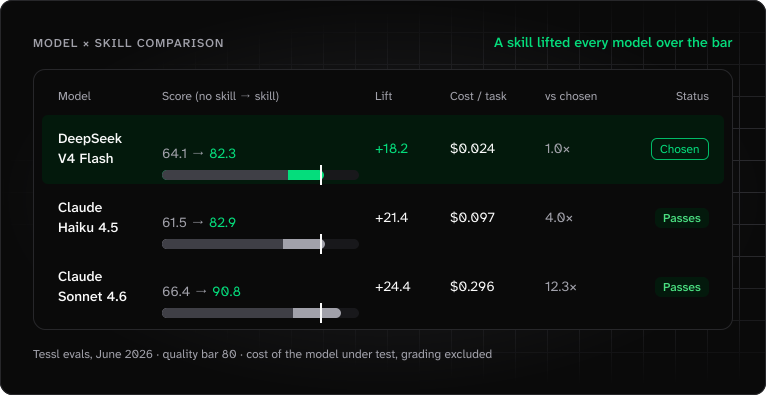
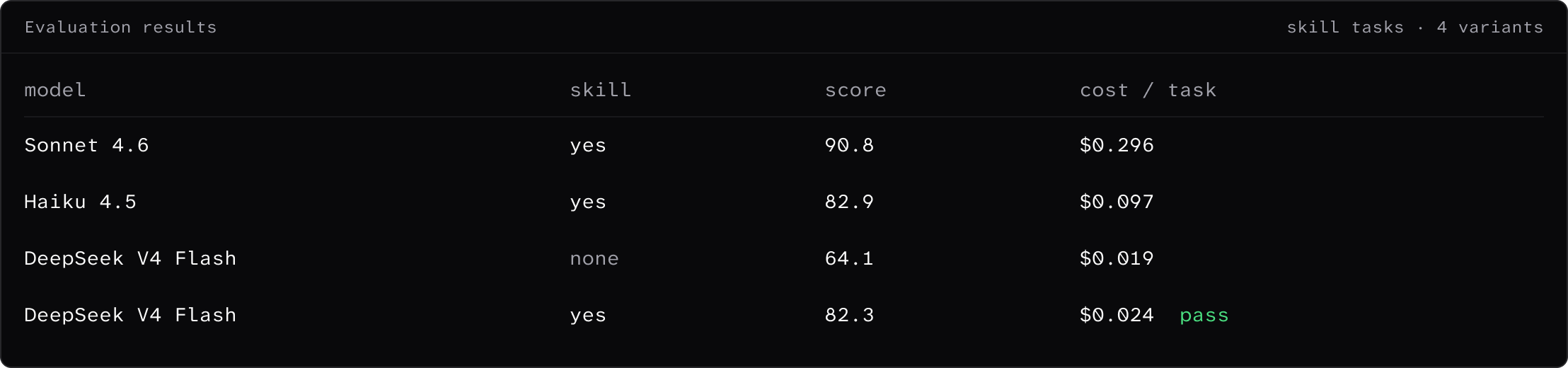
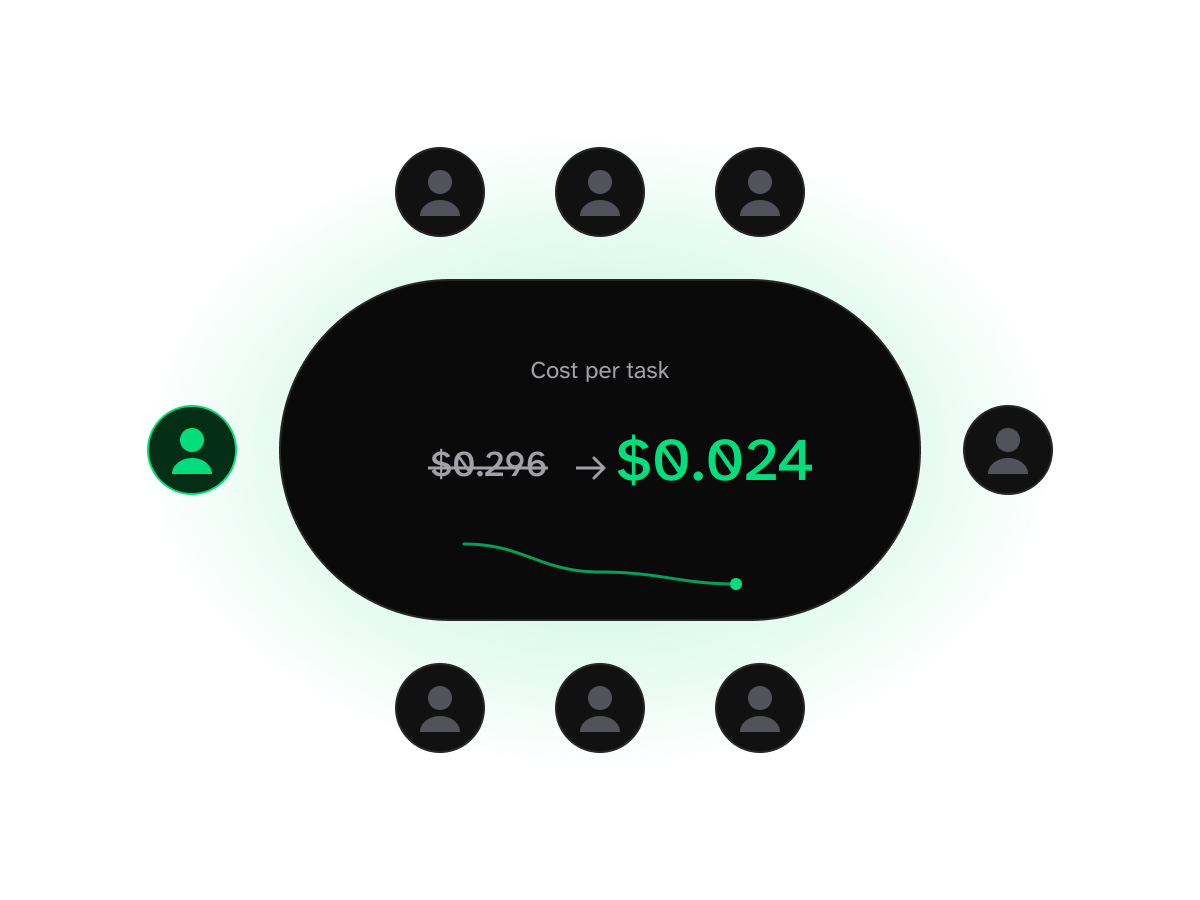
Same tasks: with a skill, the cheaper model clears the bar at 1/12 of the cost
Model
Cost per task
Quality score
Score
Sonnet 4.6
Frontier model + skill
$0.296
/task
12.3× vs chosen
90.8
/100
DeepSeek V4 Flash
No skill
$0.019
/task
0.8× vs chosen
64.1
/100
DeepSeek V4 Flash
With skill
$0.024
/task
Chosen
82.3
/100
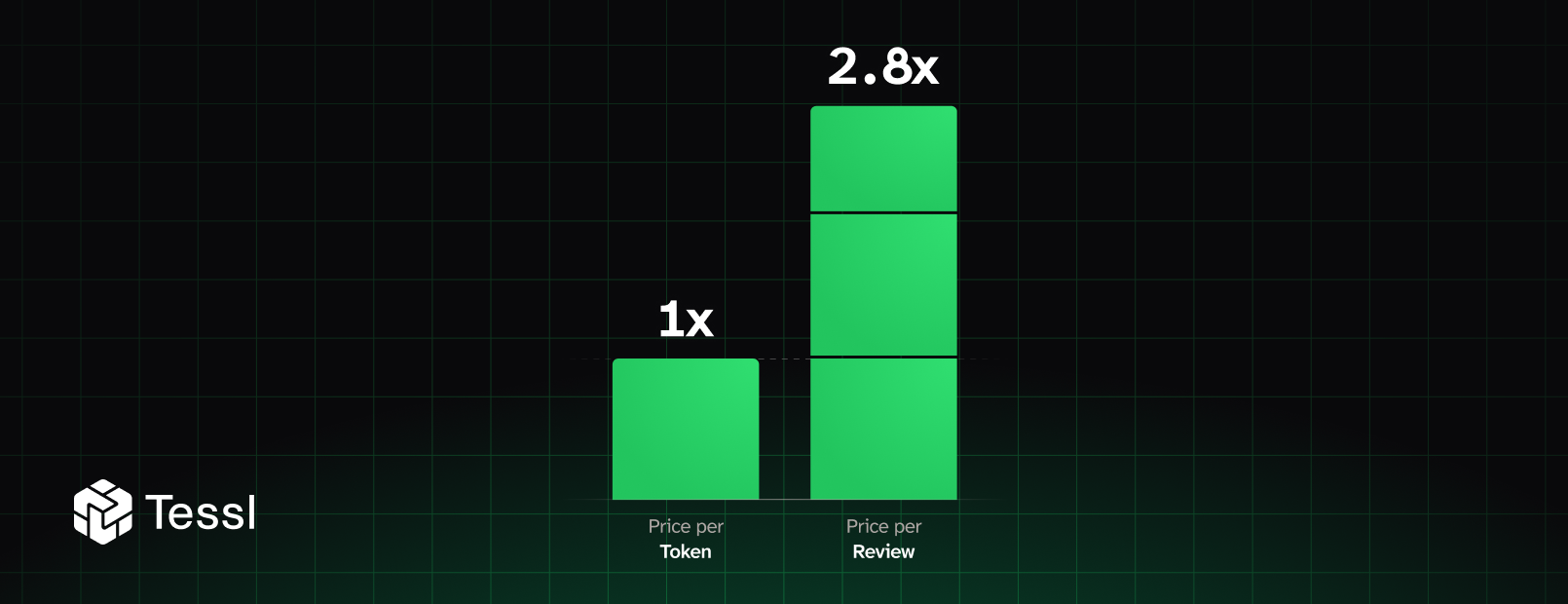
Cheaper tokens don’t always mean cheaper outcomes
In Tessl’s code-review study, the model with the highest token prices delivered the lowest cost per independently graded major or critical finding.
Read the case studyFour models tested across 10 pull requests. Results vary by workload and review setup.
up to
5.0×
lower cost per verified major or critical finding
Choose a lower-cost configuration for the work you repeat
Test models, agents and skills on the same representative tasks. Compare measured cost against your acceptance criteria before changing a production workflow.
Compare configurations
Run the same tasks with different models and supported agents. Compare scores, cost, speed and consistency.
Measure the value of context
Test skills against a no-skill baseline to see whether the instructions improve results enough to justify their cost.
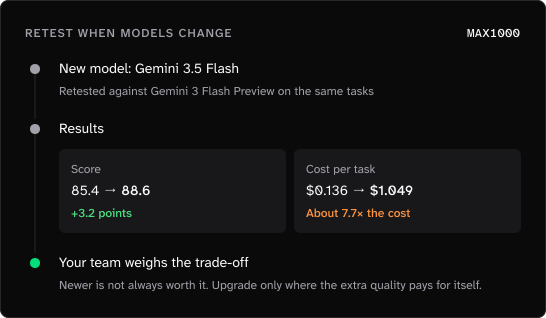
Retest when things change
Repeat evaluations when you update a model, agent or skill. Check that lower costs still come with acceptable results.
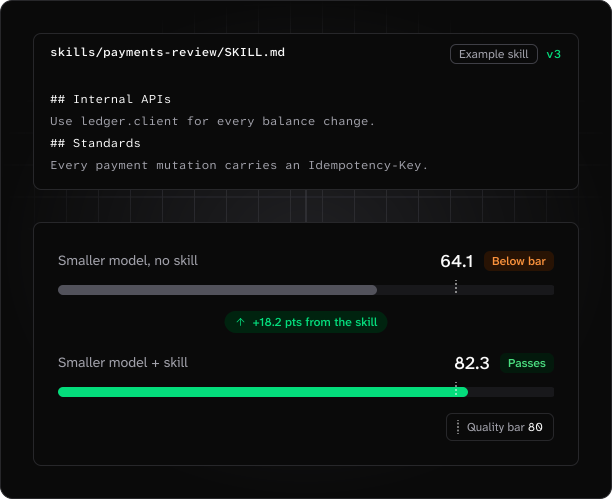
Test whether better context makes a cheaper model viable
Skills give agents instructions about your APIs, standards and workflows. Test the same tasks with and without a skill to measure its effect.
For some tasks, a well-tested skill can make a less expensive model a viable option. Evaluate the combination against your own requirements before switching.
See how skill evaluation worksMake savings repeat across your software factory
Start with work your agents perform frequently, such as code review, test generation or documentation updates. A lower cost per successful task can add up across thousands of runs.
Choose representative tasks and the requirements each result must meet.
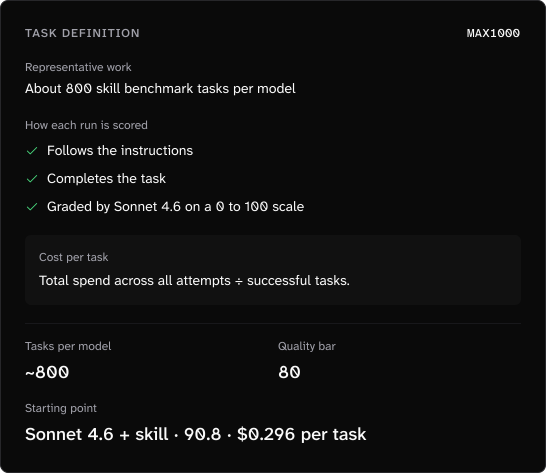
Test models and skills against the same tasks and grading criteria.
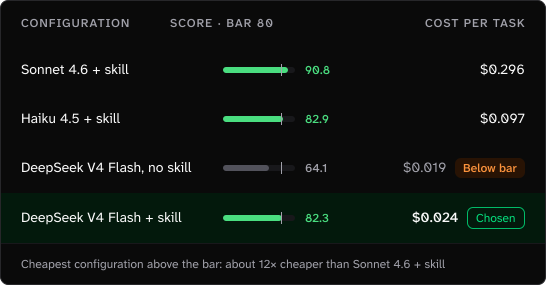
Use the selected configuration in the workflows it was tested for.
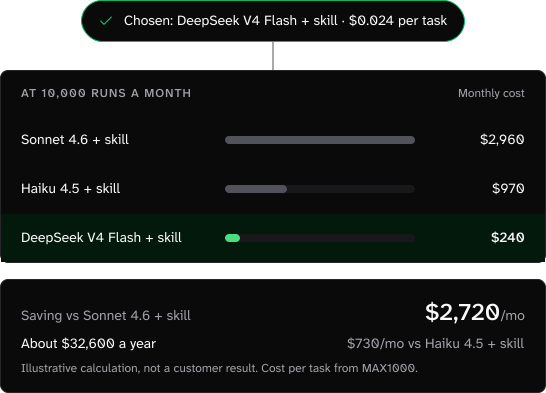
Retest as your models, skills and workflows change.
From skills to loops to a more efficient software factory
Skills
Reusable, versioned context
Loops
Repeatable evaluation and improvement
Factory
Improvements at scale
This is the difference between a one-off cheaper prompt and a repeatable way to improve the economics of agent work.
Run your own cost comparison
- 1
Choose representative tasks
Start with a skill and tasks you run frequently. Set minimum quality requirements.
- 2
Compare models
Follow the guide to run test variants. Where supported, explore harness and skill-version differences too.
- 3
Measure cost per successful task
Consider failures, retries, turns and total spend, not just token prices.
- 4
Apply and reevaluate
Select a lower-cost passing configuration and retest when models or context change.
Go deeper on agent costs and context
Featured · Research
Cheaper Tokens, Bigger Bills: Token Price Isn't Agent Cost
Token prices don't reflect the true cost of AI models in code reviews. Turns and verified outcomes are better measures, revealing hidden expenses in agent workloads.
Guide · Get started
Compare models with test variants
Follow the documented evaluation workflow to compare model choices.
Article · Research
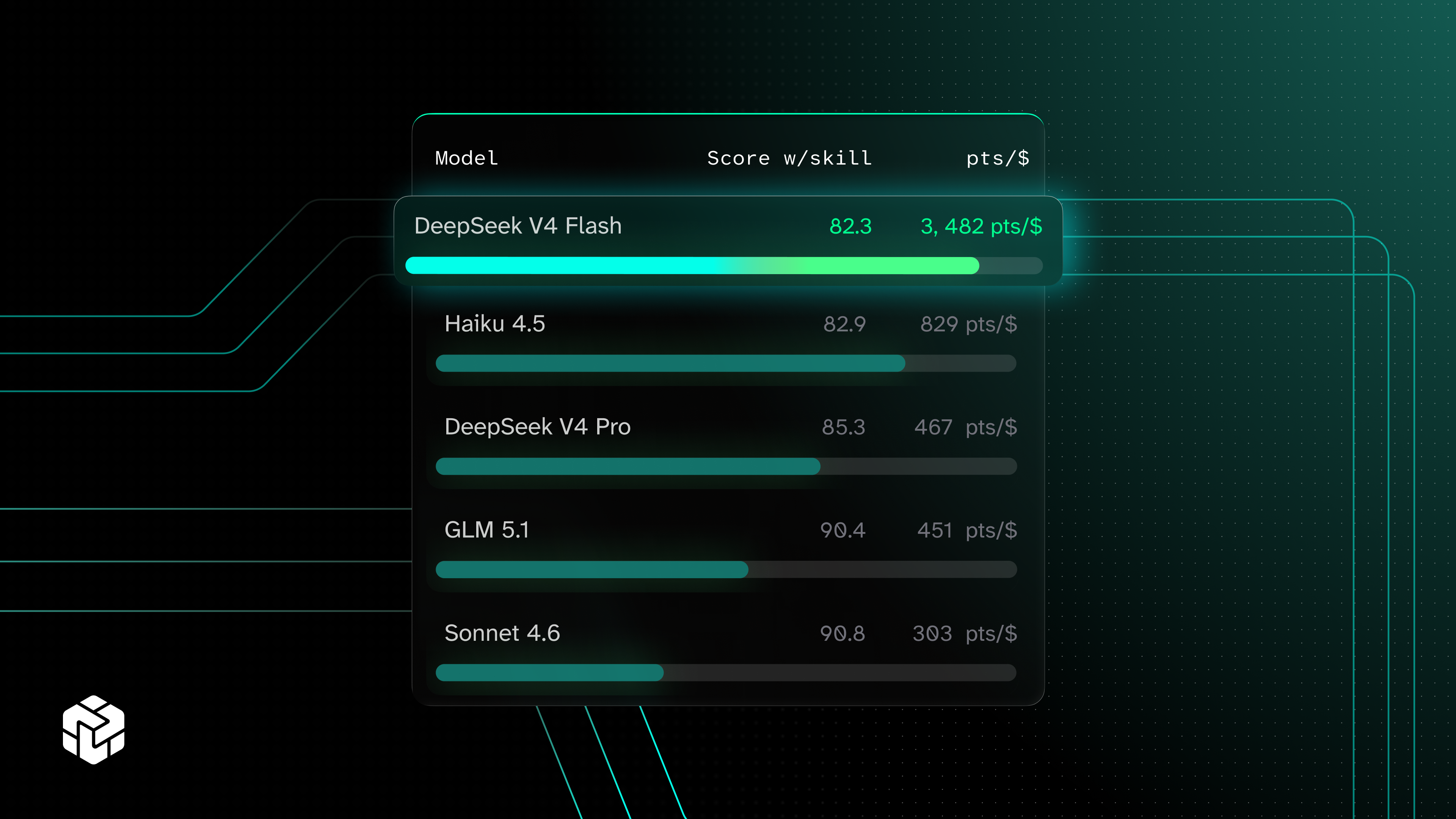
Same quality, a quarter of the cost: Should DeepSeek Flash be your model of choice?
DeepSeek Flash offers comparable quality to pricier models at a fraction of the cost, making it a cost-effective choice for running agentic tasks at scale.
Article · Skills
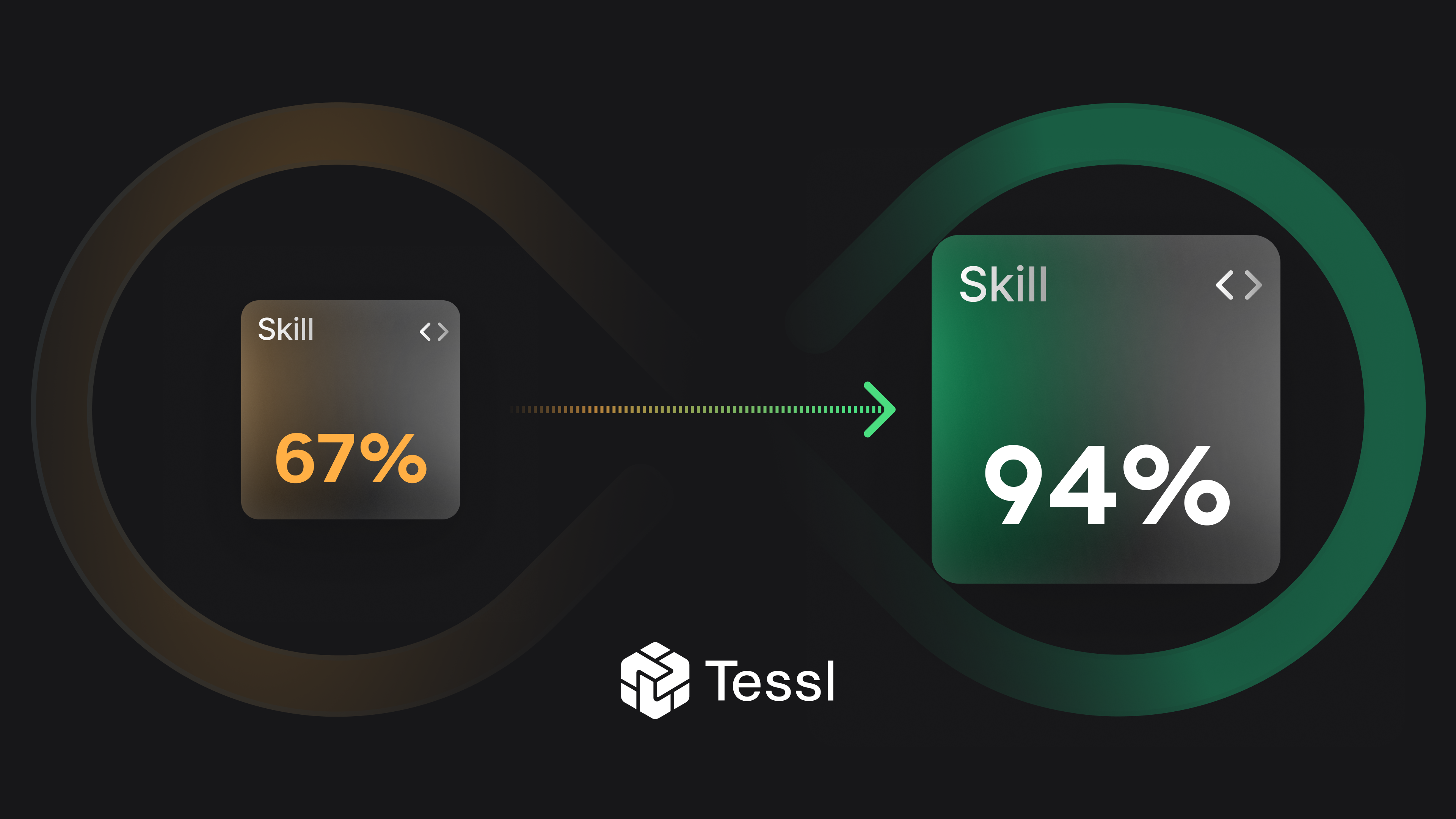
Stop guessing whether your Skill works: skill-optimizer measures and improves it
Skill-optimizer evaluates and enhances AI skills by running them through a judge-scored eval pipeline, providing measurable improvements and insights into skill performance.
AI Native Dev · Video podcast
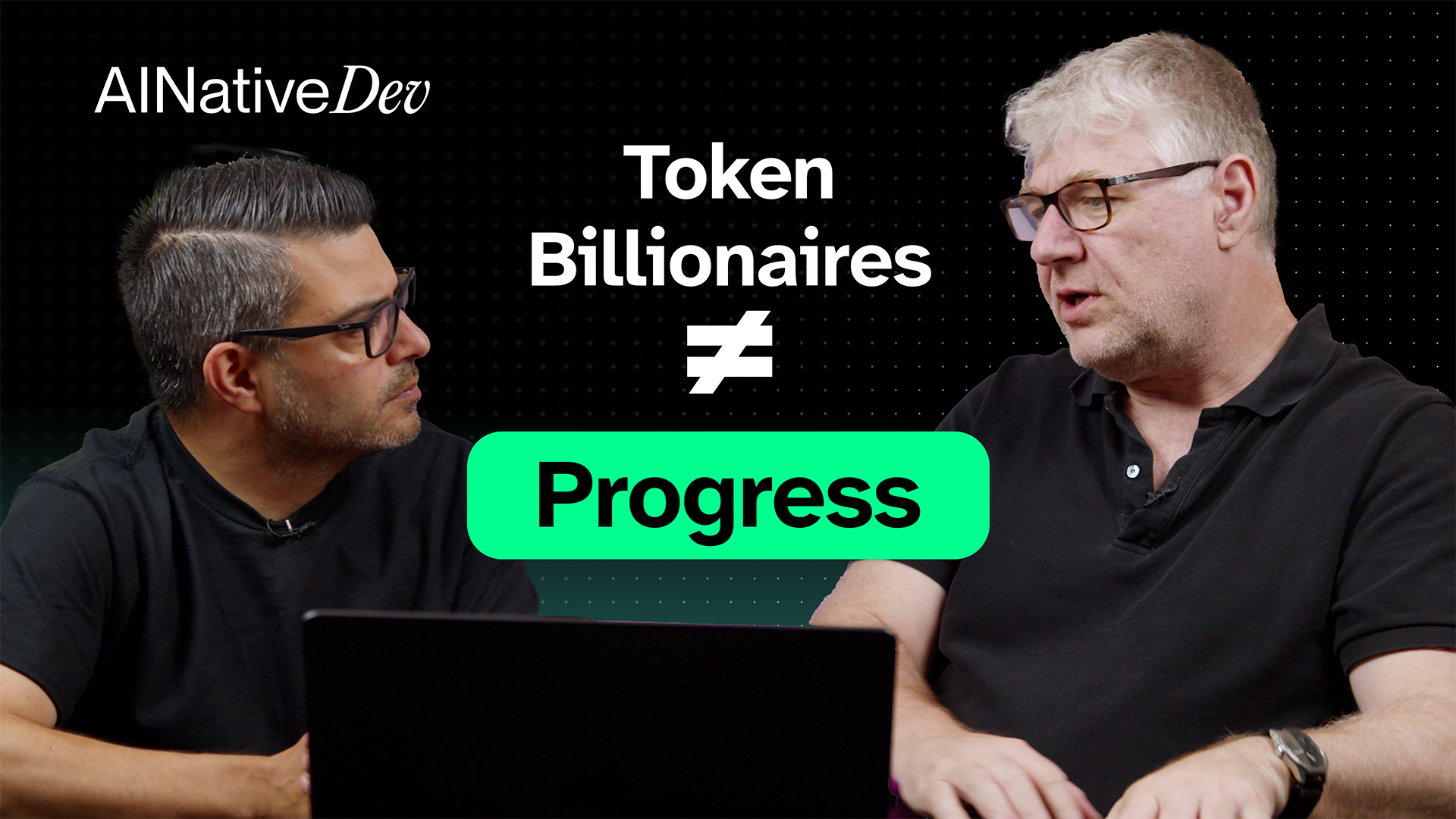
Patrick Debois Maps the Patterns of AI-Native Dev
The godfather of DevOps is back with a map of where AI-native development is actually heading.
Cost optimization workshop
Find where your team can reduce agent costs
Work with Tessl to assess a repeated engineering workflow and identify configurations worth testing.
Bring a workflow you want to improve and the quality requirements it must meet. We'll scope an evaluation of your current setup and alternatives, comparing cost, quality and reliability.
Start with a call to agree the workflow, evaluation scope and expected outputs.
Build a more efficient software factory
Find a lower-cost configuration that meets your quality bar. Reuse it across the work your agents do most.
FAQs
No. Turns, retries and failed tasks affect total cost.
Yes, for some tasks. Test the model and skill together against your quality criteria.
Yes. The same platform supports code review, context evaluation and other agent workflows. Some loops are in early access.
Not currently. Use Tessl evaluations and model-comparison test variants to assess cost and quality. See the guide
Model comparison is documented today. Check supported harness integrations and evaluation setup before promising specific comparisons.
No. This page describes evaluation-led decisions, not automatic production routing or scheduled re-optimization.